
How To Reduce Downtime During Trailer Deck Repairs
November 14, 2026
A trailer sitting in the shop isn't hauling equipment, delivering materials, or earning its keep. What starts out as a simple job, swapping out a couple broken boards, can easily turn into several days of lost work once the crew finds rusted cross members or replacement lumber that doesn't fit.
Some delays come from damage nobody could see. Others are self-inflicted: the wrong boards, the wrong screws, or not enough material on hand. Here's how to keep a trailer deck repair moving and get the trailer back on the road, without cutting corners on the finished floor.
Find the Hidden Damage Before You Start
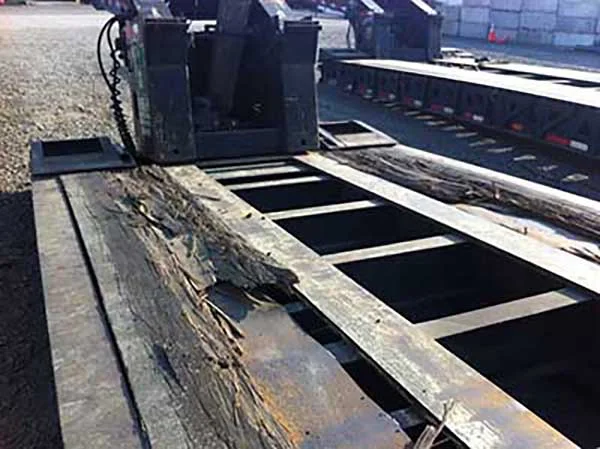
A split or broken board is the obvious problem. The real damage may be hidden. Before you decide how big the job is, probe any questionable wood with a screwdriver or an awl. Sound hardwood resists the tool. If it sinks into soft, punky wood, you've got rot.
Check the neighboring boards too. Every board on the deck has seen the same rain, sun and road spray over the years, so rot rarely stops at one plank. If you keep finding soft wood every time you pull the next board, stop chasing it one plank at a time. That floor is telling you it's time to replace instead of repair.
Inspect the Cross Members
Pulling the old boards is your chance to look at the understructure, which normally stays hidden. Look for rust, pitting and deterioration, especially around the fastener holes and anywhere water and road debris collect.
If the metal is still structurally sound, clean it up, use a metal restoration product like POR-15, seal the surface and repaint it. It might not look great, but you'll get many more years out of the trailer. If the cross members are badly corroded, the trailer needs welding or replacement work before any wood goes down. Finding that out after the new boards are screwed in means tearing out finished work, and that's the most expensive kind of downtime there is.
Know When to Stop Patching
Replacing individual boards makes sense when the damage is truly isolated. About the only time that really happens is when the trailer was overloaded and a heavy piece of equipment cracked a couple of otherwise sound Apitong boards. Replace those boards, and don't overload the trailer next time.
Widespread rot is a different story. When several boards have soft spots or through splits, patching one section at a time turns into an endless cycle. Every visit to the shop means more labor pulling screws, cutting replacement pieces and reopening sections of the floor that should have been dealt with the first time. The goal isn't to redeck every time a board breaks. It's to recognize when spot repairs stop paying off, and a complete redeck is the smarter long-term move.
Measure Before You Order
Ordering replacement boards from the trailer's original spec sheet is asking for trouble. Earlier repairs may have introduced boards in a different thickness or profile, and nominal sizes don't always match what's actually on the trailer. Measure the existing floor: thickness, face width and length. Check several boards, because old boards shrink and wear, so one worn piece isn't a reliable guide to what the trailer was built to accept.
Rough Boards Run Oversize

Rough sawn boards in Apitong and Angelim Pedra are cut full to size. They generally run about 1/8 inch over the listed size, and some boards measure as much as 1/4 inch oversize. They're never intentionally undersized. A 2-inch rough board won't necessarily measure exactly 2 inches thick.
That's normal for full-sawn lumber, but when you're replacing a few boards in an existing deck, it can leave the new board sitting proud of its neighbors. You can plane down a board that's too thick. Just plan for it before the trailer is in the bay, not after.
Match the Shiplap Profile
Shiplap trailer flooring is milled smooth, with overlapping rabbeted edges, usually laid out in what's called a Z-lap pattern. Rough boards have square edges. The two aren't interchangeable, so match the replacement to what's already on the trailer.
Even within shiplap there are differences. Face widths vary, and T-boards use a different lap arrangement and go in specific positions, such as the center board. Check the lap configuration and the actual exposed face width so the install doesn't stall halfway across the trailer. If you're not sure what you have, send us a photo of the board ends.
Plan for Stubborn Screws
Anyone who has pulled an old trailer floor knows the screws can eat up a surprising amount of time. Years of road spray leave corroded screws, stripped Torx heads and broken shanks. Use the correct driver bit, keep it firmly seated in the head, and if a screw won't back out, extract it or cut it. Just don't damage the cross member getting it out, or a simple flooring job turns into a metal repair job.
Predrill, Countersink, Clean Out
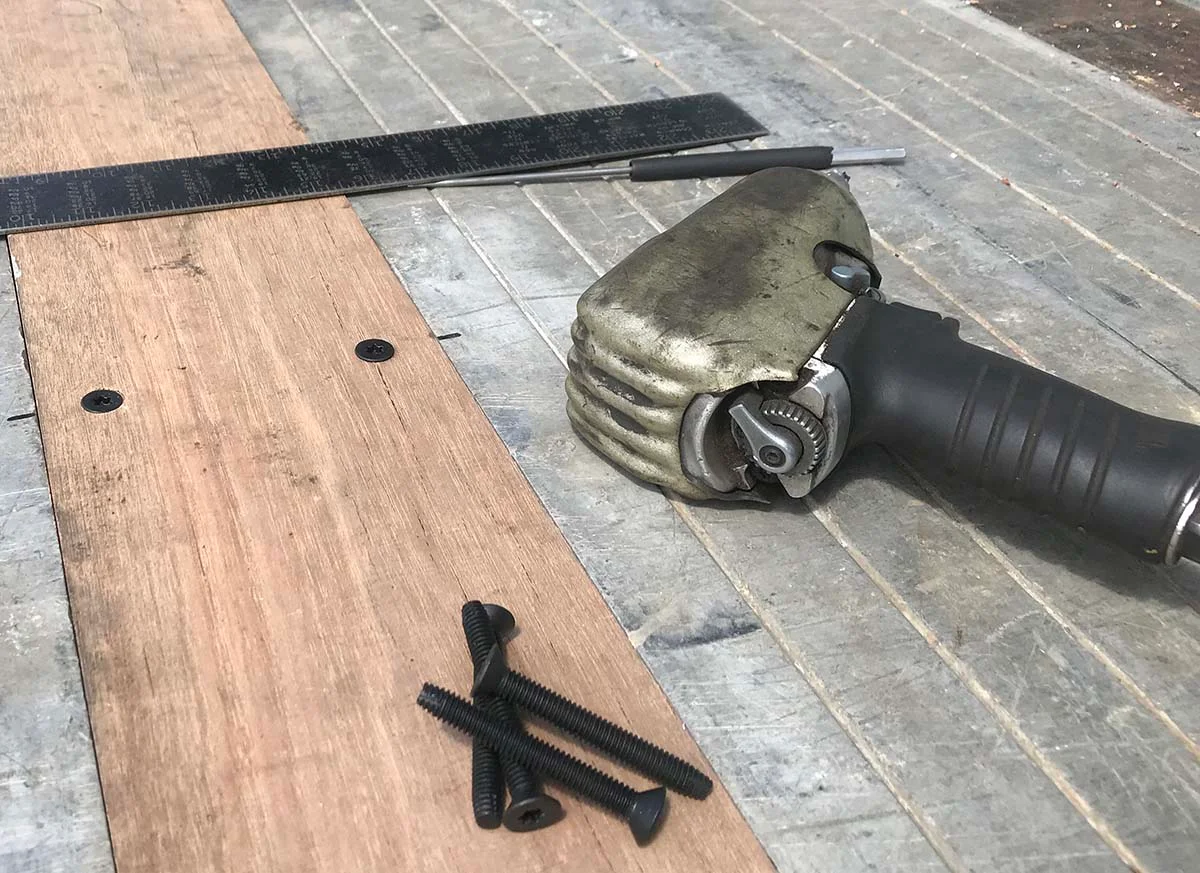
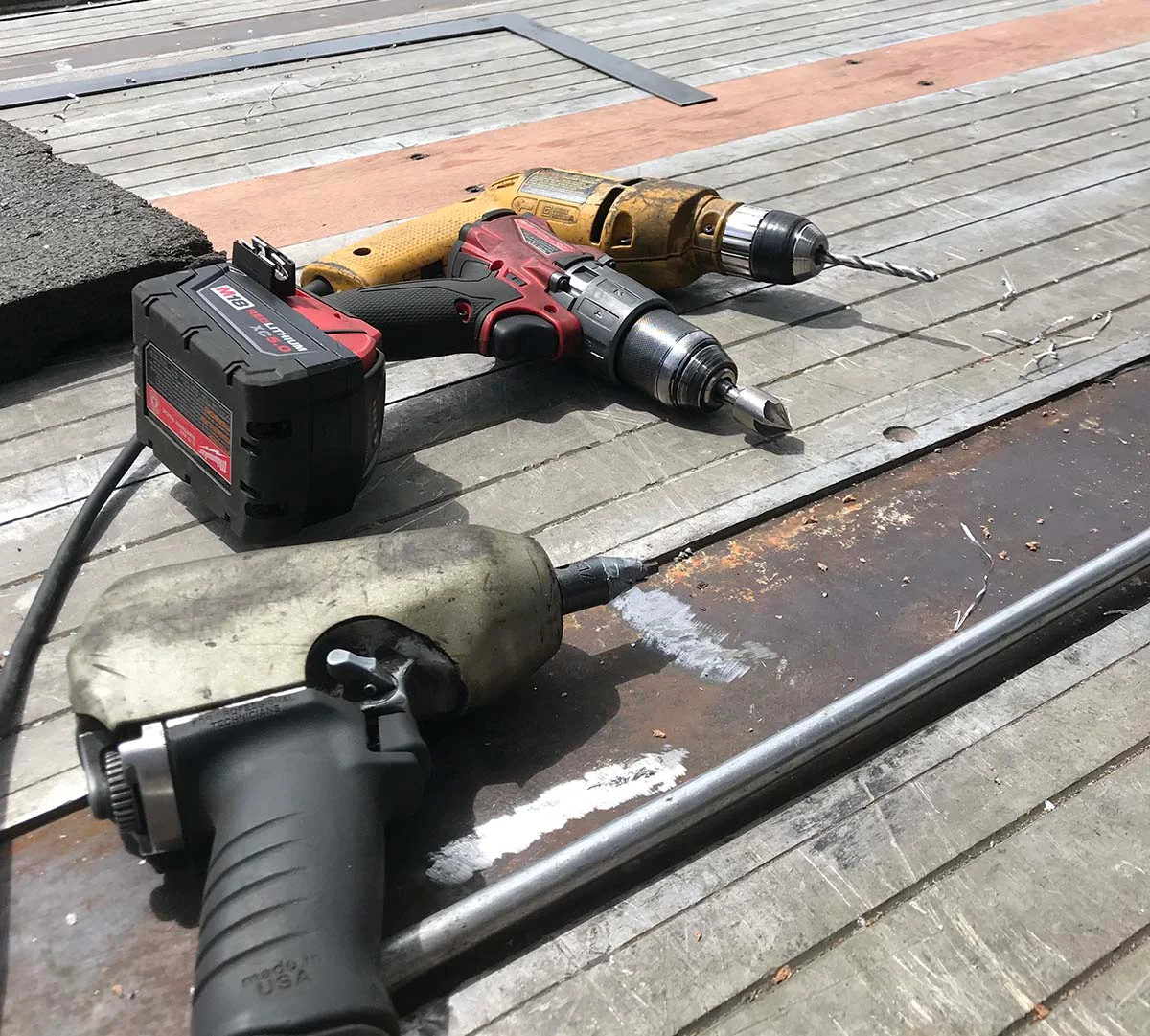
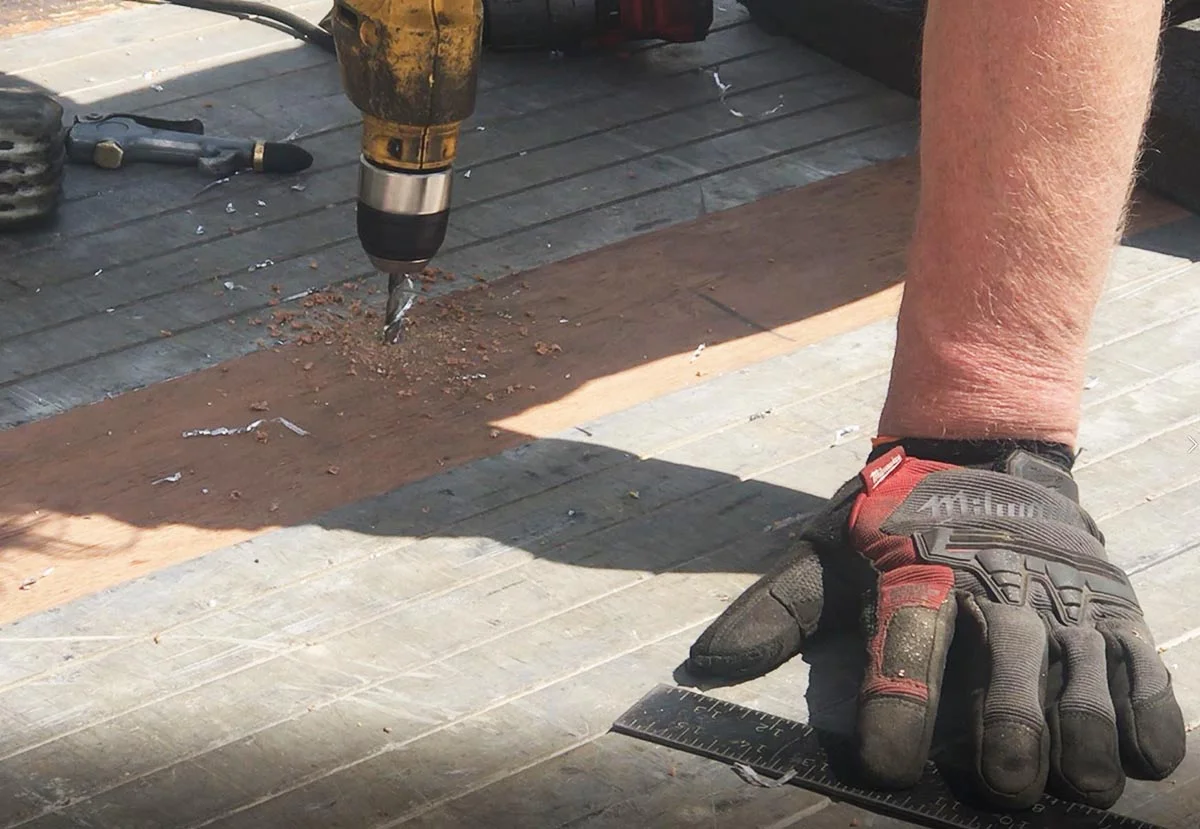
Don't reuse the old holes. They're usually in the middle of the cross member and may still hold stripped threads or a broken screw. Mark fresh locations, then follow the same three steps every time:
- Predrill straight through the hardwood and into the cross member. Use a 7/32" bit for 1/4-20 screws and a 9/32" bit for 5/16-18 screws. A corded drill with a 1/2" chuck works best; battery drills don't have the torque for hundreds of holes through hardwood and steel.
- Countersink each hole so the screw head sits flush or just below the surface, never sticking up where it can snag a strap.
- Clean out the hole with compressed air. Wood and metal shavings left in the hole bind up the threads, and the screw won't seat cleanly.
Keep fresh T30 and T40 driver bits and spare drill bits on hand. Worn bits waste a lot of time on a full-length flatbed with 700 screws. Plan on one driver bit for every 200 screws. With the right trailer deck screws and tools, a two-person crew can redeck a 48-foot flatbed in a day.
Don't Run Short on Material
Running out of boards halfway through a redeck is an expensive mistake. The crew is ready, the old floor is already off, and the trailer sits there until the missing lumber shows up.
Figure board counts from the actual usable deck width and the face width of the boards, not the overall board width. With shiplap, those are two different numbers. Then add for cuts, trimming the last board, and any extra sections you found during the inspection. Use our screw calculator to size the screws, bits and countersinks for the job.
Trailer decking ships by LTL freight from our warehouses in Forest Grove, Oregon and Memphis, Tennessee. When we have the material in stock, it typically ships in 1 to 2 days, and transit runs about 5 to 10 days depending on how far you are from the warehouse. Confirm sizes, lengths and quantities with us before you schedule the job, and time the delivery so the boards arrive before the trailer goes into the shop.
Protect the New Boards
Saving time is good. Rushing the last step isn't. A fast repair doesn't accomplish much if the new boards start to deteriorate in their first season.
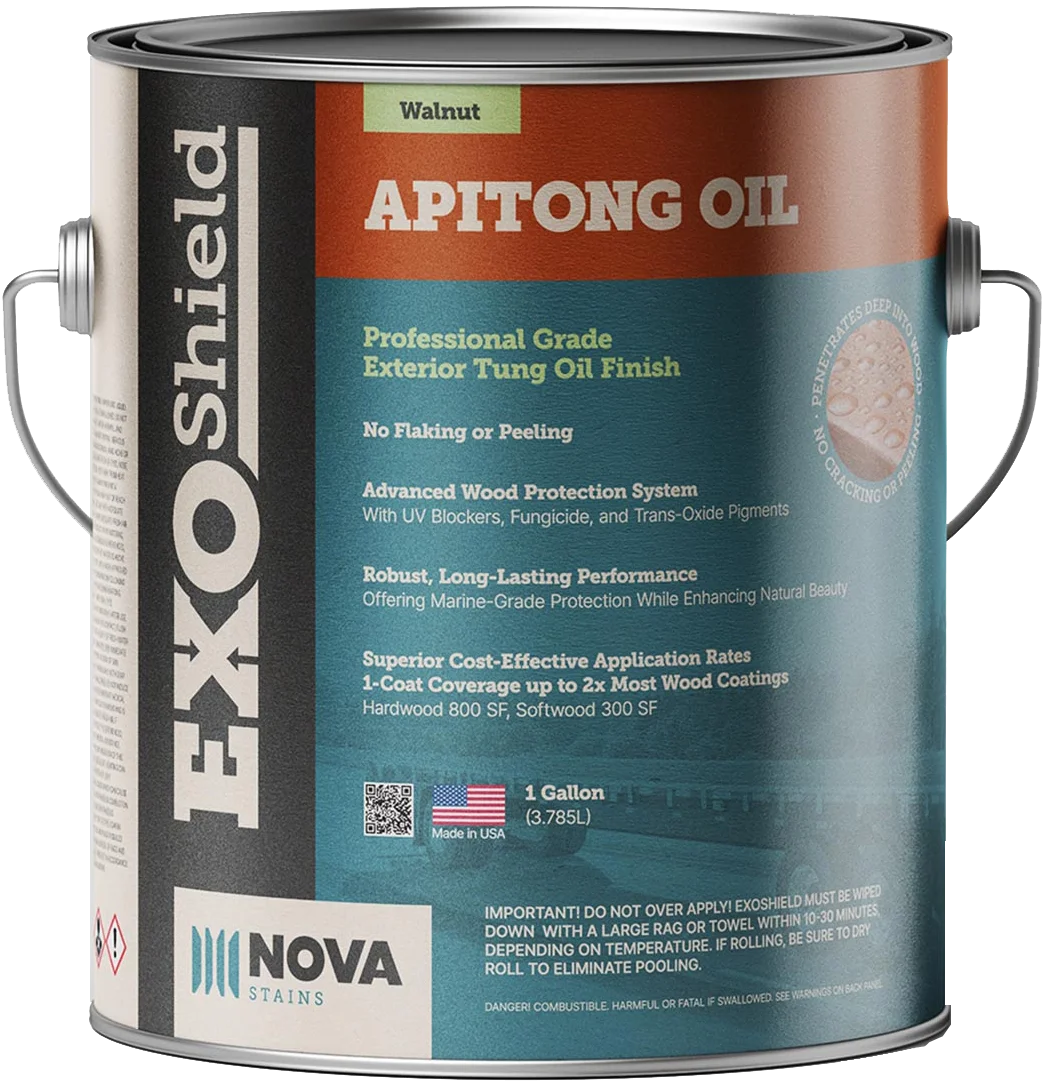
Leave a 1/8" gap between boards so they have room to swell when they get wet. Seal every freshly cut end with ExoWax end sealer, because end grain soaks up moisture fast. Then finish the deck with Apitong Oil by ExoShield, a penetrating tung oil finish that limits water infiltration and protects the wood from UV. Apply it to clean, dry wood, let it soak in, and wipe off the excess. It protects the floor without leaving a film on the surface. Check the weather before you start: the deck should be dry, and you'll want no rain for 24 to 48 hours afterward.
Get Your Trailer Back on the Road
TrailerDecking.com carries Genuine Apitong and Angelim Pedra trailer flooring in shiplap and rough boards, plus Type F deck screws, Torx bits, drill bits, countersinks and finishing products, all in one order. Not sure which boards fit your trailer? Measure the existing floor, take a few photos of the damage, and send them to our team or call 1-855-APITONG. We'll help you find the right material so you can finish the repair and put that trailer back to work.