When To Replace Trailer Flooring Instead of Repair
September 16, 2026
A trailer floor can look rough and still have a lot of life left. One cracked board and some loose screws don’t automatically justify replacing the whole deck. The floor can be dirty, weathered, or wet while holding up just fine.
The real question is whether the damage is isolated and repairable, or whether the floor is starting to fail as a complete system. When multiple issues are present—such as rot, through splits, and holes—replacing the trailer flooring becomes a better option than a repair.
Rot or Soft Spots Extend Beyond One Board
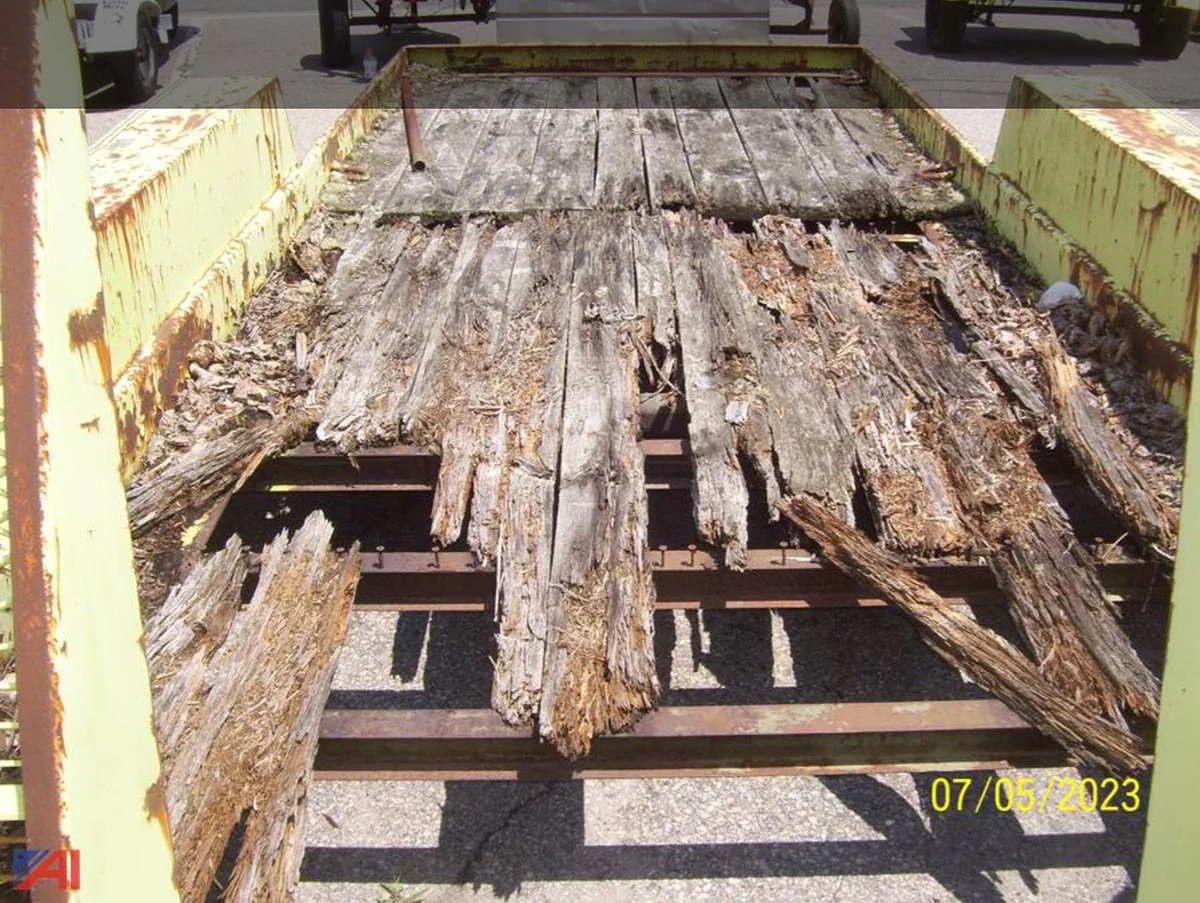
The first step is to probe the questionable area with a screwdriver, awl, or another small hand tool. Sound hardwood should feel solid. If the tool sinks into soft, punky wood, then you’ve got rot and decay.
One isolated rotten board is easy enough to remove and replace. But if the neighboring boards are soft, you’ve crossed into replacement territory. When you encounter any rot whatsoever, it’s very likely that you’ll have to replace the whole floor. All the boards have been more or less exposed to the same elements during the service life of the wood deck.
Rot doesn’t follow the neat outline visible from the top. Moisture sits between boards, around fasteners, and against the supporting structure. If you keep finding soft, punky wood every time the adjacent board comes up, stop chasing the problem one plank at a time and replace the flooring.
When Is Single-Board Replacement the Right Move?
About the only time the board replacement really makes sense is when the load was too heavy for the trailer, causing the boards to break. Replace the boards, and don’t overload the trailer next time. Driving very heavy equipment on the floor can be risky.
Metal Understructure Damage Control
If you are doing a simple board replacement, be sure to inspect the understructure to look for rusted-out cross members or main beams. Look carefully where the fasteners go through the cross members. Is there extensive rust or pitting?
Use a metal restoration product, seal the surface, and repaint it, as needed. It might not look great, but you’re likely to get many more years out of the trailer if you stop or slow down understructure damage.
Boards Have Surface Checking Due to Exposure to the Elements
A trailer deck does not need to look pretty. It does need to stay solid, reasonably flat, and securely attached.
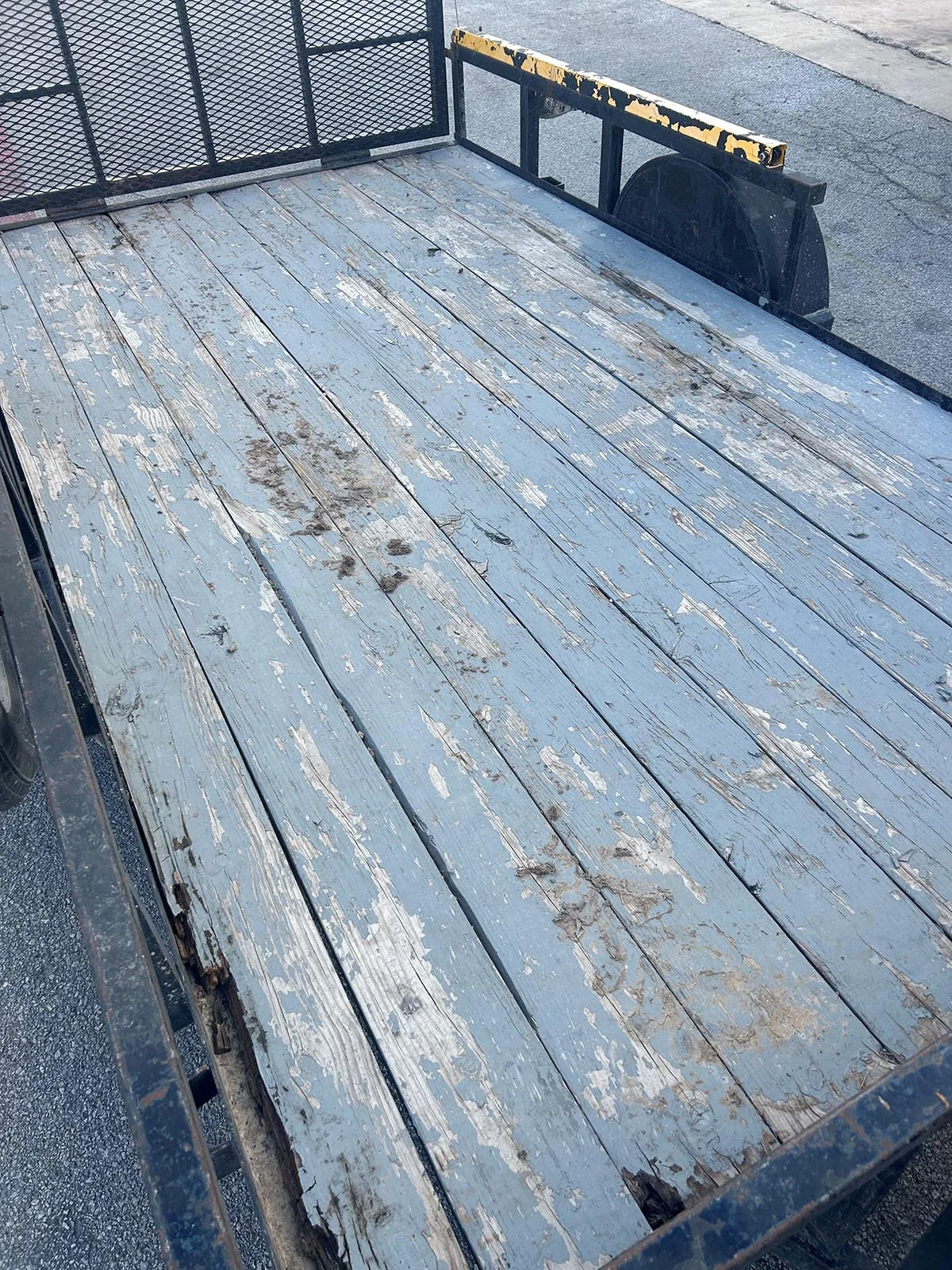
Surface checking—small, shallow cracks in the wood—can form on the exposed exterior surface as the wood expands and contracts with moisture changes. Shallow checking in the 1/8'' to 1/4'' range that runs along the grain isn’t the same as boards with through splits or breakage.
If one board has a serious split or break, you’ll need a new board. If the same damage is on multiple boards—especially in areas that see repeated loading, equipment traffic, or impact—individual plank replacement starts to make less sense.
If you did overload your trailer floor, then broken boards might be present without being visible. Watch the floor as you load a heavy piece of equipment. Excessive flex or the sound of cracking wood is a strong clue that the time for a replacement is now.
Fastener Replacement Caused by Material Failure
Fasteners can fail on a trailer floor when the wrong fastener was chosen. Carbon steel will rust out within a few years on exposure. Coated carbon can get you buy, provided the coating doesn’t get stripped off when screwing into metal cross members.
Stainless steel screws are more appropriate for residential decking and not industrial-use trailer flooring. They can outlast anything, but their strength is very low compared to other options. Galvanized screws would be a reasonably good choice but near impossible to find in a self-tapping, Torx finish head variation.
TrailerDecking.com carries OEM-grade Type F thread-cutting screws in 1/4-20 and 5/16-18 sizes. This is the industry standard. These typically last twice as long as the wood floor itself, ranging roughly between 10 and 15 years of normal use.
When replacing a low-quality softwood deck with high-quality hardwood, you will typically find the manufacturer used a similar low-quality fastener to attach the wood to the substructure. The best choice is to get rid of and replace both parts at one time.
Warped Wood Causes Uneven Flooring
One cupped or twisted board is usually a repair, not a replacement. An entire section that is full of cupped boards is something else, and it’s not necessarily defective wood.
Remember that wood changes dimensions as its moisture content changes. Cupping is always caused by a moisture differential between the top surface and the lower surface. In the wintertime, you can expect swelling. Sometimes, the floor will buckle. This isn’t a defect of the wood; This is a result of not allowing adequate gapping between boards during installation, which likely took place during the summer dry season.
The remedy? Let the wood dry out. Then, seal it up with Apitong Oil or a similar oil finish. You may need to cut one board narrower per section—remove, mill down, and replace the wood. There has to be space between boards so that, when they do swell, they have some room to expand. The generally recommended gap is 1/8''. However, if you know it’s dry and the trailer will be wet all winter, go with 3/16'' gaps between boards.
Delaminating Plywood or Laminated Flooring
Plywood and laminated truck flooring don’t fail the same way a solid hardwood board does. Both depend on layers staying bonded together. Once moisture gets into the glue joints, you might see delamination and swelling at the bond line.
For plywood, look closely at the edges first. Visible gaps between layers are a sure sign of a major issue. Plywood floors are typically used for light-duty utility trailers and interior floors in a small, enclosed trailer. Replacing a plywood floor with a treated softwood is a step up, but replacement with hardwood is the ultimate solution.
For laminated trailer flooring, failure is almost always caused by excessive exposure to moisture or when the load far exceeds the capacity of the floor itself. Laminated flooring is designed for interior, not exterior, use.
Tips for Using Apitong Oil
Apitong Oil by ExoShield can help protect sound plywood before it reaches that point. The penetrating tung-oil finish helps limit water infiltration and provides UV protection. Since extra moisture seeps into the edges, pay extra attention to sealing those areas first. Apply it only to clean, dry material, and remember what the finish is doing: protecting wood that still has its integrity.
There are limits here, and they’re important. Apitong Oil won’t rebond plywood that's already delaminated, and applying it doesn’t make plywood a good choice for an exposed flatbed or open trailer. TrailerDecking.com recommends solid Apitong or Angelim Pedra for exposed trailer applications because plywood edges remain vulnerable to water intrusion.
Using a wax, such as ExoWax, to seal all the edge grain or end grain in a plywood floor can help prolong the life by preventing moisture from penetrating into the bonded veneers. Ideally, use the wax before exposure to the elements.
The same rule applies to laminated truck flooring. You can use Apitong Oil by ExoShield on sound laminated truck flooring, but LTF belongs in enclosed dry vans and truck-body applications. Don’t put laminated flooring on an exposed flatbed and expect a finish to make up for the application. If an existing plywood or laminated floor has already started separating through multiple layers, replace the damaged material first, then use the finish to protect the sound flooring that’s left.
Maybe You Bought the Wrong Trailer?
Let’s just say you bought a lower-quality, entry-level utility trailer. Then your landscaping business takes off, and you get some commercial jobs that require heavy-duty, earth-moving equipment. How do you think that Southern Yellow Pine floor is going to hold up? Not very well. Time to consider a hardwood like Apitong or Angelim Pedra.
If you catch it before it’s too late, you might be able to just replace the top boards with something more durable and salvage your investment in the trailer frame itself. Consider either shiplap or rough board, depending on what kind of loads you are actually carrying.
Remember that rough trailer boards generally run oversize by 1/8 inch of the listed size, and some can measure as much as 1/4 inch oversized. That difference matters when you’re matching an existing floor, fitting boards against the frame, or figuring out what you need to order.
When it’s time to buy new trailer decking, remember the classic line: measure twice, cut once. Get your measurements together, take some photos, and send them off to our team for guidance. If you let us know the exact situation of your existing trailer, we’ll help you find the best long-term solution.
Restore Your Trailer With Dependable Materials
The question of repairing or replacing needs careful consideration. No magic number of replacement boards tells you a trailer floor is at the end of its life. Let the team of experts at TrailerDecking.com help you figure out when it’s time to replace the trailer floor.
Using Genuine Apitong or Angelim Pedra gives you a solid starting point for replacement projects. Our industrial-grade installation accessories will help make the process as easy as possible.