
What Makes a Quality Trailer Deck Screw?
November 14, 2026
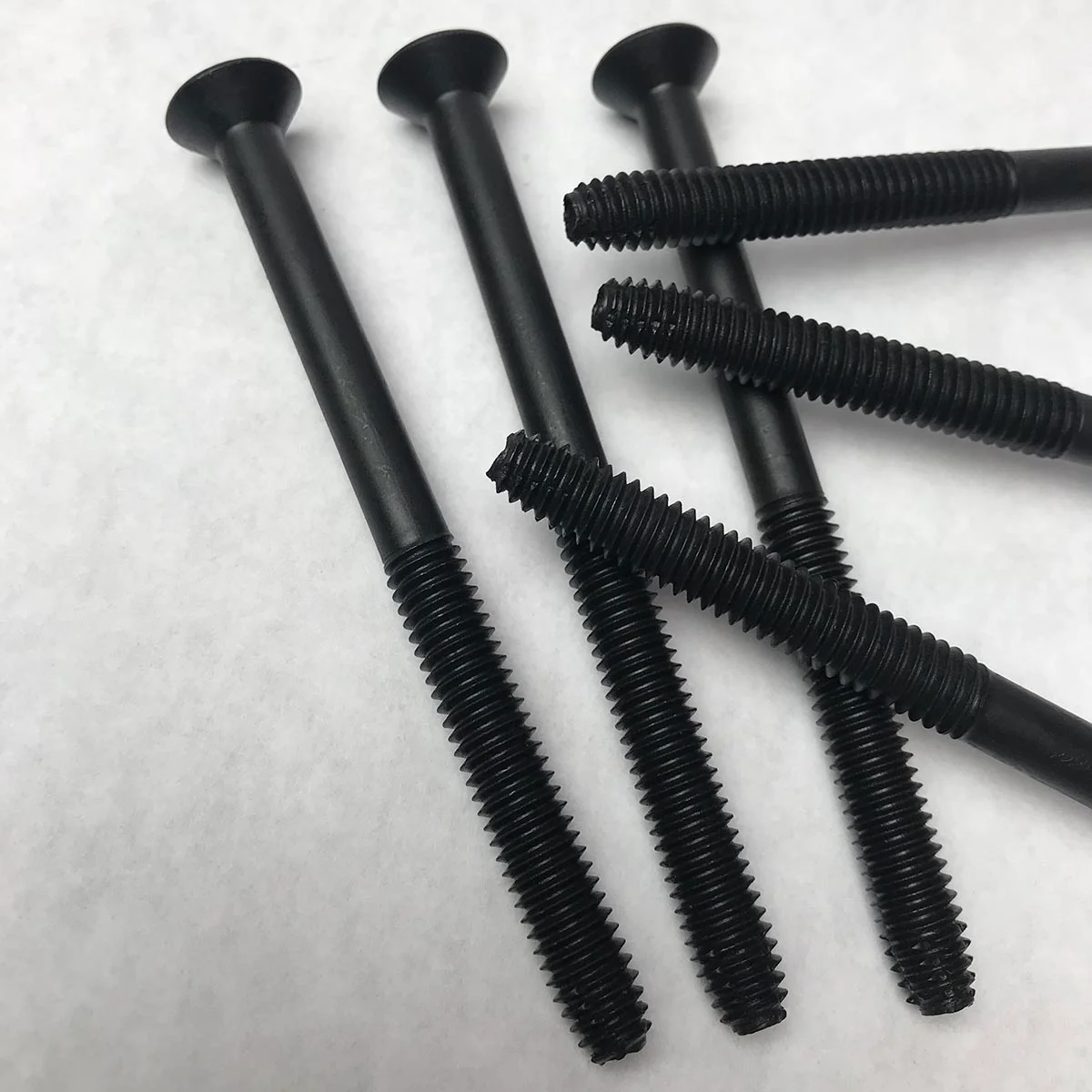
A trailer deck screw looks pretty ordinary until it has to drive through dense Apitong or Angelim Pedra and bite into a steel cross member. Weak steel means heads twisting off. A sloppy drive recess strips out leaving a mess to back out. Threads that don't cut cleanly leave the board and fastener loose. Then the trailer hits the road, and vibration, road spray and heavy loads go to work on every connection. An industrial quality trailer deck screw is built for that job - high density hardwood mounted on steel, not for general construction.
Most trailer deck screws on the market are commodity hardware: low grade steel, spray painted black, a generic thread pattern, and maybe, if you’re lucky, they have a phosphate coating slapped on. Here's what actually separates a fastener that holds from one that fails on a working trailer floor.
Type F Thread-Cutting, Not a Wood Screw
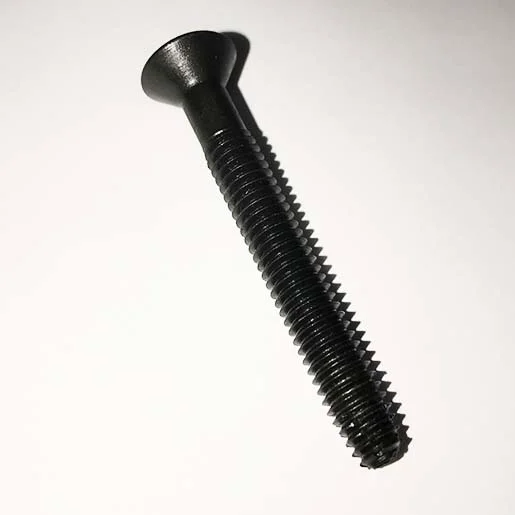
Trailer deck screws are not wood screws. After pre-drilling, they pass through the board and cut their own mating threads in the metal cross member. A Type F thread-cutting screw uses a machine-screw thread with cutting edges near the tip, so it forms clean threads in the steel and clamps the board tight to the frame.
The two standard sizes are 1/4"-20 and 5/16"-18. TrailerDecking.com carries both in OEM-quality Type F trailer deck screws, in lengths from 2" to 4". And no, again, these aren't self-drilling screws. In trailer applications, you must still predrill.
Steel That Holds Under Torque
Driving a screw through dense hardwood and into steel puts a lot of twist on the shank. Once it's seated, the screw takes tension and shear from the load and constant vibration from the road. The steel has to be strong enough not to twist off and tough enough not to snap when you put the torque to it.
We spent years tuning the steel alloy, the thread pitch, the cutting tip and the lubricant on our screws specifically for heavy duty truck flooring applications. We've tested them against every major brand on a torque-to-failure rig, and they have the highest torque rating in the trailer flooring industry.
A Torx Drive That Doesn't Cam Out
A six-lobe Torx recess gives the bit solid contact faces, so it resists cam-out far better than a Phillips or square drive under high torque. Use a T30 bit for 1/4" screws and a T40 bit for 5/16" screws. The wrong size will round out the recess and ruin the head.
Even good bits wear out after a few hundred screws in dense Apitong, so plan on one driver bit for every 200 screws. Drive with an air tool and a quality bit. Battery drivers tend to stall on dense hardwood before the screw is fully seated.
Predrill With the Right Pilot Bit
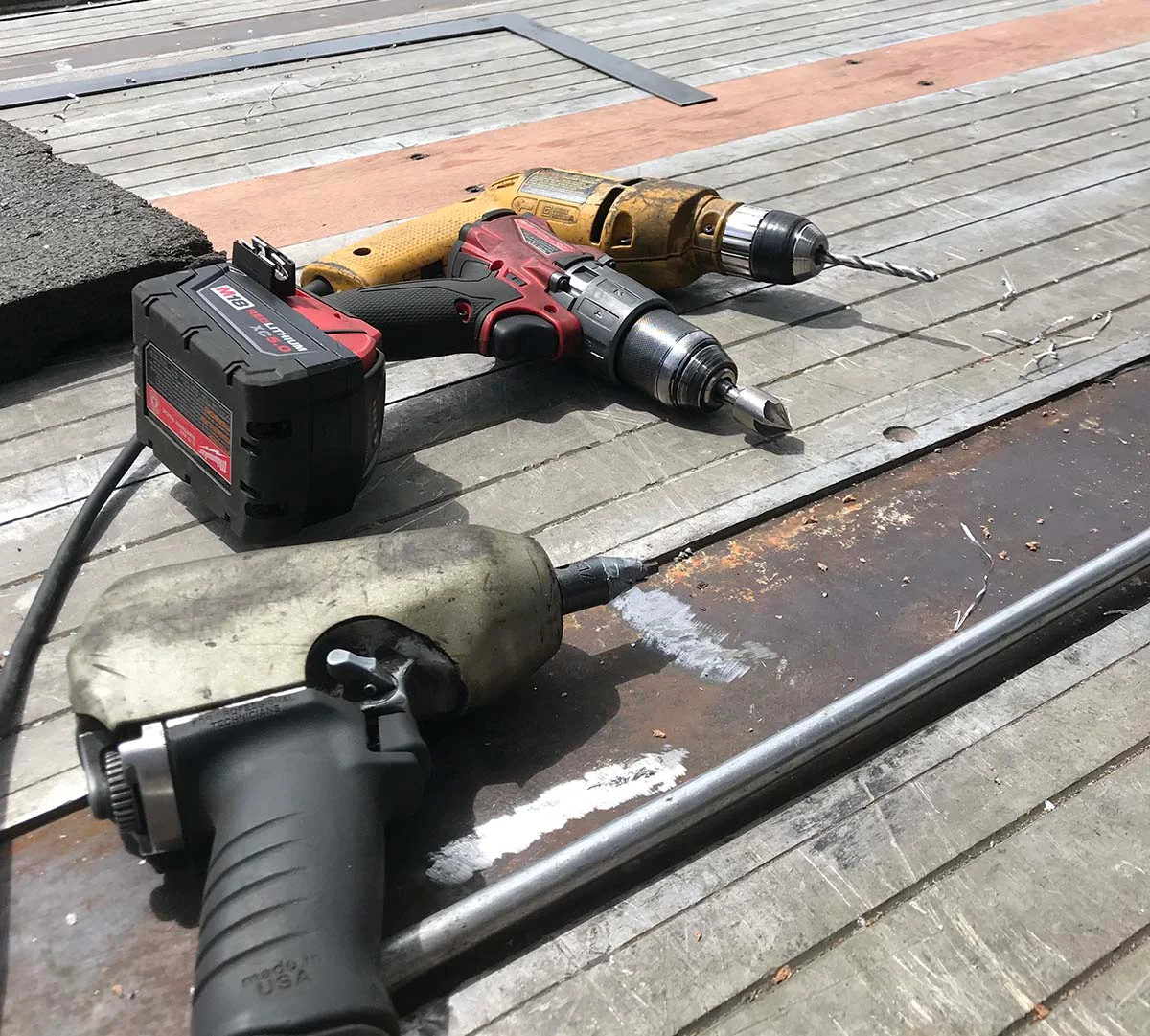
For any hardwood (Apitong, Angelim Pedra, Oak, Maple, even Pine or Douglas Fir), always predrill. The right pilot hole lets the screw advance cleanly, keeps the board from splitting and lets the thread-cutting tip do its job in the steel. The pilot drill runs about 1/32" under the screw's major diameter:
- 1/4"-20 screws: 7/32" (0.2188") drill bit
- 5/16"-18 screws: 9/32" (0.2812") drill bit
Don't reuse the old holes. They're usually centered on the cross member, may still have part of an old screw in them, and the threads are often shot. Mark each new hole about a quarter of the way in from the edge of the cross member, toward the vertical web, where the steel is thickest and the screw bites best. Use a corded drill with a 1/2" chuck, drill straight through the wood and into the cross member, and back the bit out a few times to clear chips so it doesn't overheat.
Countersink and Clean Out
The head has to pull the board down tight against the cross member and finish flush or just below the surface. A screw head sticking up will snag straps and scuff forklift tires. Cut an even bevel around each hole with a countersink bit. Most pros do it by sight.
Then blow out the hole with compressed air. Tom Pole of Vanport Trucking, who has redecked hundreds of trailers with our boards, calls this the most important step. Wood and metal chips left in the hole fight the screw, and the board won't suck down tight against the frame. For the full walkthrough, see Tom's tips on how to install trailer deck screws.
Coating, and a Warning About ACQ
Black phosphate is the standard coating on industrial trailer deck screws, and it's what we use. It gives mild corrosion resistance and works well in hardwoods, untreated softwoods and softwoods treated with MCA. Our screws are also pre-oiled, which cuts driving friction and helps every screw seat the same way. Lubricant doesn't make up for bad threads or weak steel, though.
Do not use phosphate-coated screws in ACQ pressure-treated lumber. ACQ is highly corrosive to them and will eat them from the inside in a couple of years. For ACQ lumber, you need stainless steel or hot-dipped galvanized fasteners. Keep in mind that stainless is much weaker than a hardened trailer deck screw, which is one more reason solid hardwood is the better choice for a working trailer floor.
Match the Screw to the Board
The screw needs enough length past the wood to fully engage the steel. Measure the actual board, not the nominal size; a rough 2x8 runs a full 2" or more, while a dressed board is thinner. Here's our sizing chart:
- 1-1/8" and under: 2" 1/4"-20, T30
- 1-1/8" to 1-5/8": 2-1/2" 5/16"-18, T40
- 1-5/8" to 1-7/8": 3" 5/16"-18, T40
- 1-7/8" to 2-1/2": 3-1/2" 5/16"-18, T40
- 2-1/2" to 3": 4" 5/16"-18, T40
Anything thicker than 3"? Give us a call.
Stripped Cross Members
If the threads in the cross member are stripped, you have two options. Put an OEM-quality nut on the underside (ask us for 1/4"-20 or 5/16"-18 nuts to match our screws), or drill a slightly oversize hole and step up to the next screw diameter. Tom's rule of thumb: if more than 10% of the holes are stripped, it's time to weld in a new cross member or go to nuts on every joint.
Consistency Across a Full Redeck
A typical 48-foot flatbed with 14 boards and cross members on 24" centers takes about 700 screws: two per board at every cross member. Small variations in recess depth, thread form or hardness show up as stripped heads, broken screws and boards that won't pull tight. A quality screw behaves the same at screw 700 as it did at screw one. Most customers order 10 to 15% extra to cover bad starts. Our screw calculator will size the screws, driver bits, drills and countersinks for your deck.
One redeck with our screws beats two with the off-the-shelf alternative. With the right screws and a thick foam knee pad, a two-person crew can finish a 48-foot flatbed in a day.
Choose Fasteners That Protect Your Trailer Flooring
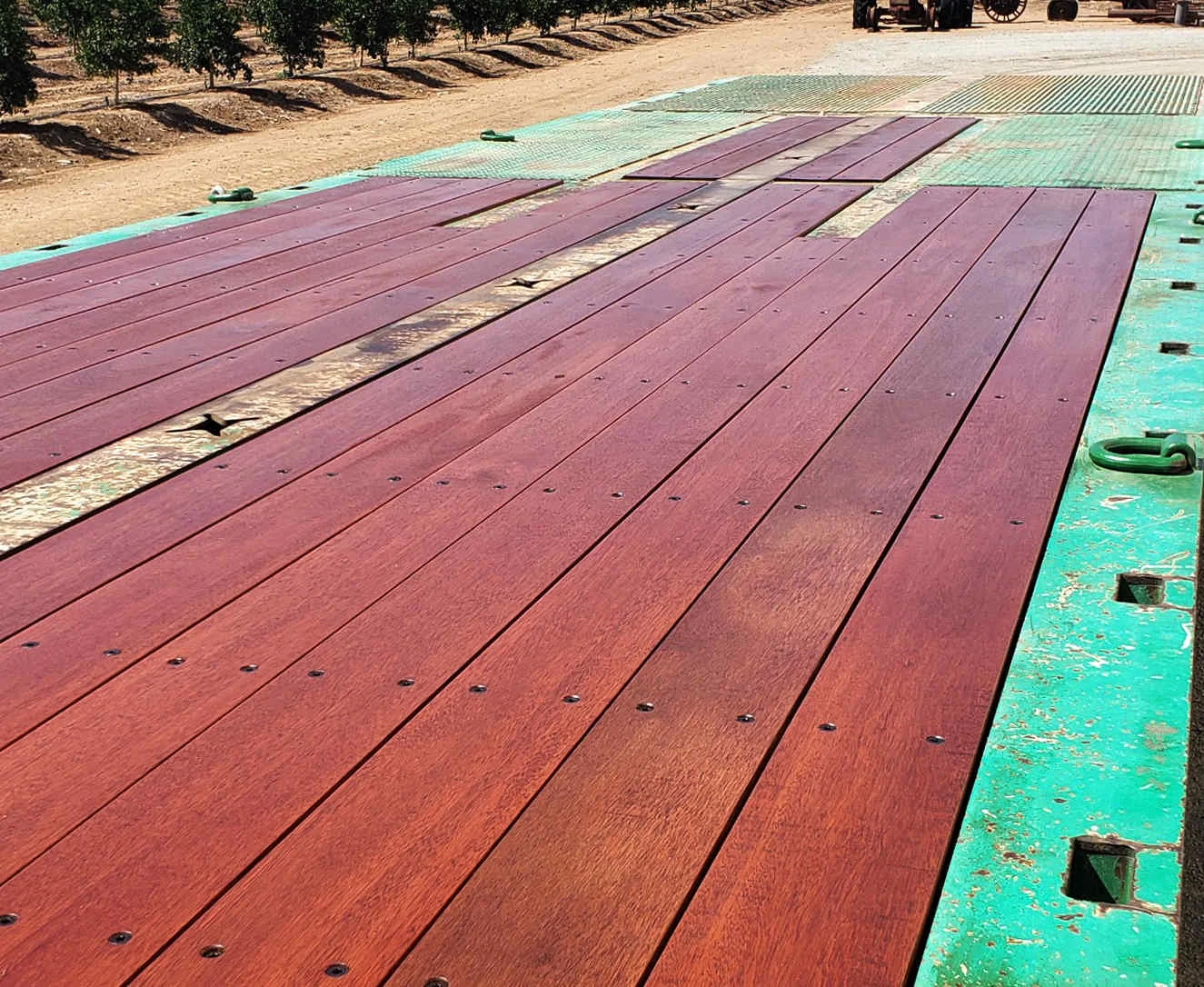
The screws hold the whole floor together, so don't treat them as an afterthought. TrailerDecking.com stocks Type F deck screws, matching Torx bits, pilot drills and countersinks alongside our Apitong and Angelim Pedra trailer flooring, all shipped from Forest Grove, Oregon or Memphis, Tennessee. Before you install, seal the cut ends of every board with ExoWax end sealer.
Sizing a redeck? Note the board thickness, the species, the cross member thickness and whether any treated lumber is involved, then call 1-855-APITONG. We'll confirm the length, diameter, pilot drill and countersink so the fasteners match the floor and the frame.