
Is Exotic Hardwood Trailer Flooring Better Than Domestic?
September 5, 2012

Trailer flooring takes a lot more abuse than regular hardwood flooring or decking. Even if you aren't a big shipping company and only use your trailer for hauling every now and then, the floor needs to be stronger, more durable, and more resistant to the elements than anything you might install in your home.
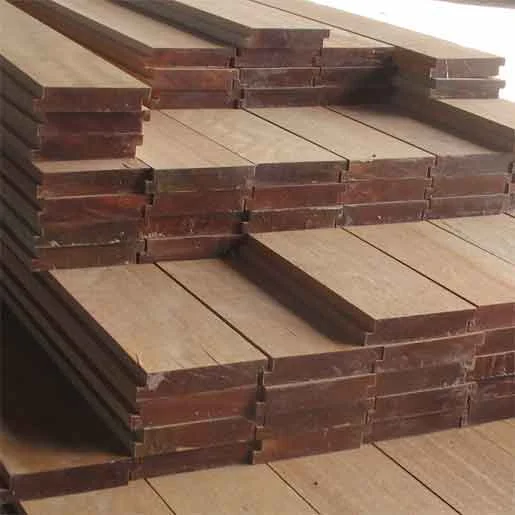
At TrailerDecking.com we sell Apitong, the tough-as-nails exotic trailer flooring trusted by industry professionals for decades. But does trailer flooring need to be exotic? Can domestic wood work just as well?
The answer, in our opinion, is no. Here's why.
Hardness
Janka hardness is one of the most important factors when choosing a trailer flooring material. A wood's hardness determines how well it resists dents, scratches, and the everyday wear of loads being dropped and dragged across the deck. Apitong has a side hardness of 1,270 pounds. The domestic softwoods often used on trailers are far softer: Southern Yellow Pine comes in around 750 pounds and Douglas Fir around 710. Domestic oaks are comparable in hardness, but as you'll see below, hardness is only part of the story.
Strength and Stiffness
Strength (modulus of rupture) is how much load the wood carries before it breaks. Stiffness (modulus of elasticity) is how much it resists bending under load. Together they tell you a great deal about how much weight your trailer floor can hold. Apitong's ratings are 19,900 psi for strength and 2,070,000 psi for stiffness. The domestic species most often used for trailer decks, from Douglas Fir to White Oak, range from about 12,400 to 15,200 psi in strength and 1,780,000 to 1,950,000 psi in stiffness.
Density and Durability
Density is another important factor in a wood's durability. Denser wood is less affected by changes in temperature and humidity and less attractive to wood-boring insects. Apitong has a density of about 790 kg/m³, well above domestic softwoods. Apitong also contains a natural oleo-resin that helps it hold up outdoors, where domestic hardwoods like oak have limited exterior durability without chemical treatment.
Cost
Domestic woods usually cost less up front, but because they are less durable than exotics they need replacing more often. Apitong can last up to 15 years in normal above-ground working conditions. You'd be lucky to get a good 5 years out of some domestic woods. The larger up-front cost of exotic trailer flooring may seem intimidating, but you'll save a whole lot of time and money in the long run.
As you can see, exotic hardwood makes for a much stronger and more reliable trailer floor. For the full comparison table, see Why Apitong? Selecting the Right Species for Your Trailer Deck, or contact TrailerDecking to talk with one of our knowledgeable sales reps.